
Dentures Peabody
Reliable Teeth for Healthier Smiles

Searching for a way to replace your missing teeth can seem overwhelming, especially since there are so many options available these days. Proven effective at restoring aesthetics, oral health, and daily use, we can help with custom-made dentures in Peabody. Crafted for comfort, confidence, and a better quality of life, you can enjoy eating, speaking, and smiling once again.
Why Choose Peabody Smile Design Family Dentistry for Dentures?
- Leading Local Providers for All-on-4 Implant Dentures
- We Are In-Network with Many Dental Insurance Plans
- High-Resolution Digital Imaging for Denture Design
Who's a Good Candidate for Dentures?

If you are struggling with moderate to severe tooth loss and you’re ready to rebuild your smile, take the next step: schedule a consultation with one of our talented dentists in Peabody! That way, they can get an in-depth understanding of your dental history, needs, and goals before determining if you’re a good dentures candidate.
Effects of Missing Teeth

Whether you recently lost a few teeth or you’ve been struggling with unwanted gaps for years, you know firsthand that the gaps in your smile can lead to a restricted diet, difficulty enunciating clearly, and trouble smiling confidently. What you may not know, however, is that it can also negatively impact your oral health. In fact, dental drift (when the teeth surrounding the gap begin to shift) is quite common following tooth loss. Although this may not seem like an issue, even relatively minor changes to your bite can lead to premature wear as well as serious dental damage. Fortunately, dentures offer those suffering from tooth loss the opportunity to regain a healthy, beautiful smile.
What Qualifies You for Dentures?

Although dentures are suitable for a wide range of patients, the only way to know if you are a good candidate is to schedule an appointment with one of our qualified dental experts. When discussing your options, you can expect to learn about the different types of dentures as well as which one will deliver the greatest benefits based on your needs.
Depending on how many teeth you are missing, the type of denture you require, the state of your oral health, and your budget, we will develop a plan that offers a personalized solution designed to give you a smile that looks and feels extremely lifelike.
Alternative Tooth-Replacement Options
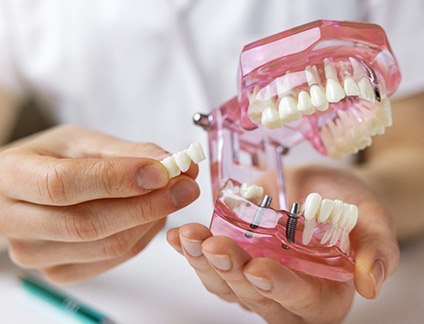
In addition to offering traditional dentures, we offer:
- Dental Bridges – As you may have guessed from the name, this type of restoration is designed to “bridge” the gap left following tooth loss. It’s often recommended for patients who are missing one tooth or up to four teeth in a row. Since both the prosthetic teeth and the dental crowns that secure them in place are custom-made, you can have peace of mind knowing that the results will look and feel natural.
- Dental Implants – Dental implants are considered the gold standard in tooth replacement. There are a few reasons for this, including that they can last for 20+ years, can replace any number of missing teeth, and fully restore both the root and crown of the tooth. They can be paired with a denture to create a result that rivals nature when it comes to aesthetics and stability.
Types of Dentures
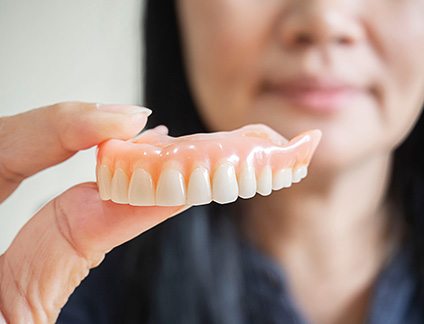
There are three types of dentures you can expect our team to go over with you during your consultation.
Partial Dentures
Combining an acrylic base with a metal framework and artificial teeth, a partial denture is crafted to fill in the gaps along the upper or lower arch. Working like a puzzle piece, it fits into place and attaches to healthy abutment teeth for added stability. A partial can be easily removed so that you can maintain it over time and ensure its longevity.
Full Dentures
Similar to a partial denture, full dentures are made using an acrylic base and artificial teeth. Their purpose is to replace an entire arch and provide a greater ability to eat and speak. These prosthetics are held in place by natural suction; however, many people choose to use a small amount of denture adhesive for greater stability, especially when eating a meal or preparing to make a speech. They are completely removable, so you can adequately clean them and soak them overnight.
Implant Dentures
These prosthetics consist of a denture attached to titanium posts that fuse with surrounding tissue after being placed within the jawbone. Mimicking the natural function of tooth roots lowers the risk of bone loss and facial collapse over time as well as allows for an improved bite force and clearer speech. With careful maintenance, these artificial teeth can last for 20 years and beyond.
Benefits of Dentures
While the most prominent might be the opportunity to enjoy life with a complete smile again, there are several others to consider:
- Better bite force, so you can eat some of your favorite foods again
- Ability to preserve your facial shape
- Teeth that can last several years or a lifetime (implant dentures)
- No longer worrying about slurring your speech
Denture FAQs
Do Dentures Break Easily?
While dentures are remarkably durable, they are not invincible and will eventually need replacement. With excellent care, most dentures can last between five and seven years, but accidents can happen. Dentures are frequently broken due to being dropped when being cleaned, removed, or inserted, but they can also become damaged if they fit poorly or have tiny defects like scratches and notches in their base. Even if you treat your dentures with the most excellent care, they will still experience wear and tear due to the strain of repeated use.
What Should I Do if My Dentures Break?
The way in which your dentures are broken and the severity of the damage will determine whether the device can be repaired or must be replaced. Since continuing to wear a broken denture can lead to injuries, discontinue use of the appliance and contact our office in Peabody to schedule an emergency appointment. If the artificial teeth are cracked or chipped, we can probably repair them with composite resin. However, a damaged base will need adjustment or replacement.
Can Dentures Lose Their Fit Over Time?
Since each denture is customized to fit the patient’s mouth, they should be incredibly comfortable after you get used to wearing them. However, traditional dentures that receive excellent care usually last for five to seven years before needing replacement due to wear and tear and the naturally changing shape of the mouth. Dentures that do not fit properly can lead to issues like trouble eating and speaking, gum irritation, and oral hygiene problems. If your dentures are no longer fitting properly, schedule an appointment with us so we can evaluate them and determine an appropriate solution.
Can I Sleep with My Dentures?
While you may be instructed to wear your dentures for a full 24 hours when you receive them, it’s usually necessary to remove them every night before sleep after that. This gives the mouth time to relax and clean itself and prevents oral health issues like gum disease. When your dentures are not being worn, store them in a clean container with lukewarm water or an approved cleansing solution.